


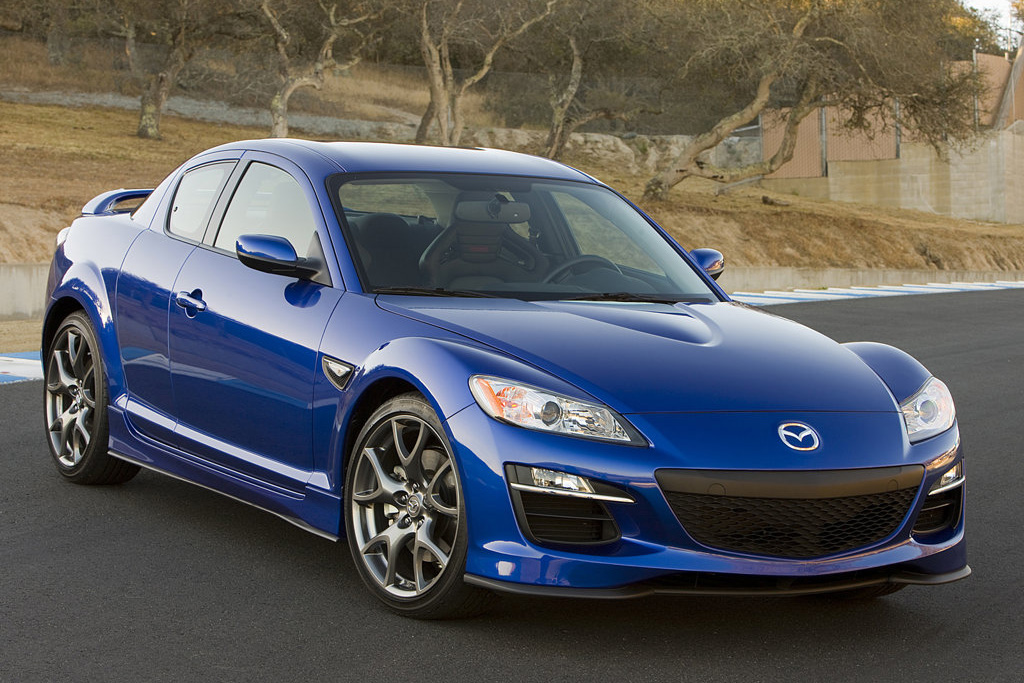
 Mazda RX8
 Mazda RX8
 Mazda RX8

Mazda Furai 2012
The Furai ( Fūrai?), meaning "sound of the wind", is the fifth and last of the Mazda Nagare line of concept cars that have been made by Mazda since 2006. The chassis is based on the Courage Compétition C65 Le Mans Prototype that Mazda last used to compete in the American Le Mans Series, two seasons previously is designed to use E100 ethanol fuel, it is powered by a new generation 3-rotor wankel engine that puts out 450 brake horsepower (340 kW). The engine is developed and built by renowned rotary tuner, Racing Beat, who also built the car's rotary-shaped muffler canister.
The car bears the #55 number that of its 1991 24 Hours of Le Mans winning ancestor, the 787B. Unlike many concept cars, the Furai is fully functional and is currently being tested at various tracks. It has run at Laguna Seca and Buttonwillow.
Head designer, Laurens van den Acker, has stated in an interview with Top Gear magazine that there are possibilities of the Furai being used for racing in Le Mans, and he also has strong hopes that the car could be brought to the market Mazda Furai
 Mazda Furai
 Mazda Furai

 Mazda Furai

Mazda Cars
New Mazda Nagare Concept Design, Say what you like, and the Mazda brand recognition is nearing one hundred per cent: when you look at any model of the company or there is not a single doubt in her tribal affiliation. One style, designed in the spirit of the concept of Nagare, when you create a Japanese inspired by nature, is felt even in a clumsy pickup BT-50. Now, as bolt from the sky, publicists have manifested a new press concept Shinari, which will be the prototype for all new models of the company. It turns out, Mazda may be quite different. Mazda Cars
 Mazda Cars
 Mazda Cars
 Mazda Cars
 Mazda CarsMazda Cars
 Mazda Cars


The Super Future Cars
 Future Cars
Various technologies have been developed and utilized to increase the energy efficiency of conventional cars or supplement them, resulting in energy savings.
Regenerative braking technology saves and stores energy for future use or as back up power. When conventional brakes are used, 100% of the kinetic energy lost is converted to thermal energy, and dissipated in the form of heat. Regenerative braking recovers some of this energy to recharge the batteries in a hybrid vehicle.
BMW's Turbosteamer concept uses energy from the exhaust gases of the traditional Internal Combustion Engine (ICE) to power a steam engine which also contributes power to the automobile (Hanlon, 2005). This can increase energy efficiency by up to 15%.
Compressed air Hybrid is an engine made by researchers at Brunel University in Britain, which forces highly compressed air into the engine, which they claim reduces fuel consumption by 30%.
Utilization of waste heat from D.W. as useful mechanical energy through exhaust powered steam, stirling engines, thermal diodes, etc.
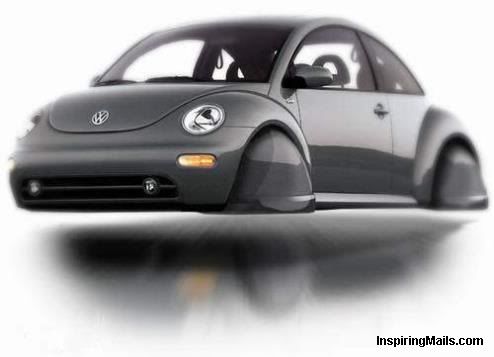
Using computational fluid dynamics in the design stage can produce vehicles which take significantly less energy to push through the air, a major consideration at highway speeds. The Volkswagen 1-litre car and Aptera 2 Series are examples of ultra-low-drag vehicles.
 Future Cars
 Future Cars
 Future Cars
 Future Cars
 Future Cars
 Future Cars
 Future Cars
 Future Cars
 Future Cars
2013 Fiat 500L
 |
| 2013 Fiat 500L |
 |
| 2013 Fiat 500L |
 |
| 2013 Fiat 500L |
 |
| 2013 Fiat 500L |
A new entry into the hotly contested multi-purpose vehicle market in Europe, the 500L is considerably bigger than its siblings, much in the same way the original, pioneering 1956 Fiat 600 Multipla was compared with the Seicento that spawned it.
The 500L is to the 500 what the Mini Countryman is to the Mini Cooper: a stretched, larger version of the donor car, yet based on the same platform. The 500L (L stands for Large) will be 23.4 inches longer, 6.0 inches wider, and 5.6 inches longer than the smaller 500 and 500C models. Speaking of Countryman, the 500L is within a couple of inches of that hatchback: the 500L is 1.3 inches longer, 0.3 inches narrower, and 3.9 inches taller than that car.
Underhood, there shouldn't be any surprises: Fiat claims that the car will feature its TwinAir twin-turbocharged two-cylinder engine, MultiAir four-cylinders, and a diesel when it goes on sale in Europe. It would seem likely that the American market 500L will only get the 1.4-liter MultiAir inline-four-cylinder engine from the 500, which produces 101 horsepower and 98 pound-feet of torque in that car. Considering that the 500L is designed to hold more people and things than the smaller car, we'd imagine there will be more power on tap, perhaps from a version that borrows the turbocharged I-4 from the 500 Abarth. That engine produces 160 horsepower and 170 pound-feet of torque.
With the new Fiat 500 representing the first vehicle from the Italian automaker to arrive on North American shores since 1982 (1985 if you count the Pininfarina 124 Spider), there’s definitely a chance the L model will make it here too, though with US Fiat sales so far having fallen short of estimates, it might be a while before you see the L in North American showrooms.
2013 Fiat 500L
|
| 2013 Fiat 500L |
|
| 2013 Fiat 500L |
|
| 2013 Fiat 500L |
|
| 2013 Fiat 500L |
A new entry into the hotly contested multi-purpose vehicle market in Europe, the 500L is considerably bigger than its siblings, much in the same way the original, pioneering 1956 Fiat 600 Multipla was compared with the Seicento that spawned it.
The 500L is to the 500 what the Mini Countryman is to the Mini Cooper: a stretched, larger version of the donor car, yet based on the same platform. The 500L (L stands for Large) will be 23.4 inches longer, 6.0 inches wider, and 5.6 inches longer than the smaller 500 and 500C models. Speaking of Countryman, the 500L is within a couple of inches of that hatchback: the 500L is 1.3 inches longer, 0.3 inches narrower, and 3.9 inches taller than that car.
Underhood, there shouldn't be any surprises: Fiat claims that the car will feature its TwinAir twin-turbocharged two-cylinder engine, MultiAir four-cylinders, and a diesel when it goes on sale in Europe. It would seem likely that the American market 500L will only get the 1.4-liter MultiAir inline-four-cylinder engine from the 500, which produces 101 horsepower and 98 pound-feet of torque in that car. Considering that the 500L is designed to hold more people and things than the smaller car, we'd imagine there will be more power on tap, perhaps from a version that borrows the turbocharged I-4 from the 500 Abarth. That engine produces 160 horsepower and 170 pound-feet of torque.
With the new Fiat 500 representing the first vehicle from the Italian automaker to arrive on North American shores since 1982 (1985 if you count the Pininfarina 124 Spider), there’s definitely a chance the L model will make it here too, though with US Fiat sales so far having fallen short of estimates, it might be a while before you see the L in North American showrooms.
2012 Bugatti Veyron Grand Sport Vitesse
 |
| 2012 Bugatti Veyron Grand Sport Vitesse |
 |
| 2012 Bugatti Veyron Grand Sport Vitesse |
 |
| 2012 Bugatti Veyron Grand Sport Vitesse |
 |
| 2012 Bugatti Veyron Grand Sport Vitesse |
Vitesse means "speed" in Bugatti's native French, and the Grand Sport Vitesse has it in spades, thanks to a little extra power underhood. Bugatti took its 1000-horsepower Grand Sport and tweaked it along the lines of the world record-holding Super Sport coupe. When it finished, it was left with a Veyron SS-inspired roadster with 1200 horsepower on tap.
Bugatti said that it accomplished this by enlarging the 8.0-liter W-16 engine's four turbochargers and intercoolers, along with beefing up the Veyron Grand Sport's chassis to withstand the fury of 1106 pound-feet of torque. Bugatti also says that the car carries many of the design and driving characteristics of the Veyron Super Sport, including the SS' sleeker front end (which reduces drag) and revised suspension tuning.
The Bugatti Veyron is nothing if not a car with an otheworldly top speed, but the Grand Sport Vitesse's manufacturer was surprisingly mum about the car's top end. The standard Grand Sport was limited to 217 mph, enough to make it the world's fastest production convertible. The extra oomph from the Grand Sport Vitesse's engine could push that number up, but the Vitesse's open-roof form means it likely won't reach the Super Sport's 268 mph level.
It could reach the Super Sport's level in price, however: Bugatti hasn't announced just how much this high-performance droptop will cost, but a "standard" Grand Sport starts around $2 million, while the Super Sport coupe commands roughly $3.3 million. Seeing as the Grand Sport Vitesse blends aspects of both cars together